

 English
 中文简体
中文简体 Español
 عربى
عربى

Production delays do not always come from complex electrical faults. Sometimes, a small mismatch between a cable entry component and an enclosure can slow down an entire assembly l...
READ MOREChina JS Galvanized Flexible Metal Conduit
JS Galvanized Flexible Metal Conduit Manufacturer
-
Parameters:
Models Size (inch) Internal Dia.(mm) Externl Dia.(mm) Min. Bend Radius(mm) Reel Length JSH-8 - ...read moreBrand:
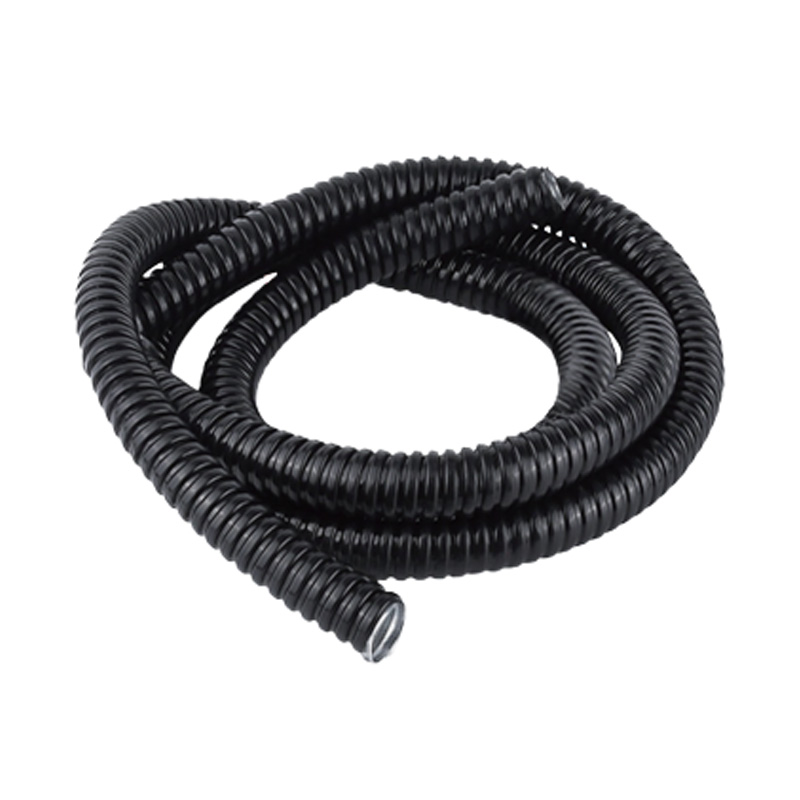
JSH PVC Coated Flexible Metal Conduit
JSH PVC Coated Flexible Metal Conduit
● Extra flexible with good mechanical strength
● Thin, vacuum-extruded jacket has minimal effect on the core flexibility
● PVC jacket is UV Resistant
● Helically wound, hot dipping galvanized steel core, for strength
● Flame self-extinguish
| Models | Size (inch) | Internal Dia.(mm) | Externl Dia.(mm) | Min. Bend Radius(mm) | Reel Length |
| JSH-8 | - | 8 | 11 | 25 | 200m |
| JSH-10 | 5/16" | 10 | 13 | 30 | 100m |
| JSH-12 | - | 12 | 15 | 40 | 100m |
| JSH-13 | 3/8" | 13 | 16 | 43 | 100m |
| JSH-16 | 1/2" | 16 | 19 | 45 | 50m |
| JSH-19 | - | 19 | 23 | 50 | 50m |
| JSH-20 | 3/4" | 20 | 24 | 50 | 50m |
| JSH-25 | 1" | 25 | 29 | 57 | 50m |
| JSH-32 | 11/4" | 32 | 36 | 70 | 30m |
| JSH-38 | 11/2" | 38 | 43 | 80 | 30m |
| JSH-50 | 2" | 50 | 55 | 95 | 20m |
| JSH-63 | 21/2" | 63 | 70 | 140 | 10m |
| JSH-78 | 3" | 78 | 85 | 150 | 10m |
| JSH-100 | 4" | 100 | 109 | 190 | 10m |
About Us
Pulte Electric Technology (Wenzhou) Co., Ltd.
Pulte Electric Technology (Wenzhou) Co., Ltd. is a China Custom JS Galvanized Flexible Metal Conduit Manufacturer and Sale JS Galvanized Flexible Metal Conduit Factory specializing in producing cable connectors, waterproof junction boxes, and other electrical product accessories. The company was born in the electrical town known as the "China Electrical Capital". It is a professional modern enterprise integrating R&D, production, and sales. Focusing on the brand building of Pulte "PULTE", with excellent technical crispness and efficient quality assurance, satisfactory and thoughtful sales service, and reasonable and affordable prices, its various technical indicators and product performance are better than its peers, and are widely used in junction boxes, distribution cabinets, communication equipment, instruments, and meters, medical equipment, machine tools, artificial intelligence, automation equipment, and other fields: constantly innovating, developing new products, forming a series of waterproof cable connectors, waterproof junction boxes, cold blocking parts, cable connector accessories, hose waterproof connectors and other products. At the same time, Wenzhou Pulte International Trade Co., Ltd., a subsidiary of the company, actively expands the international market and is committed to providing high-quality products and services to global customers, effectively broadening the company's market channels, enhancing market competitiveness, and laying the foundation for expanding the scale of the enterprise.
The company has strong technical strength and is jointly established by industry veterans. It has a professional position in the field of cable connector manufacturing. We have a complete quality assurance system and rich design and manufacturing experience. Our products are widely used in various industries and are highly reliable. We provide professional and high-quality cable-supporting products for customers. We believe that there is a product that meets your needs in our complete series of products.
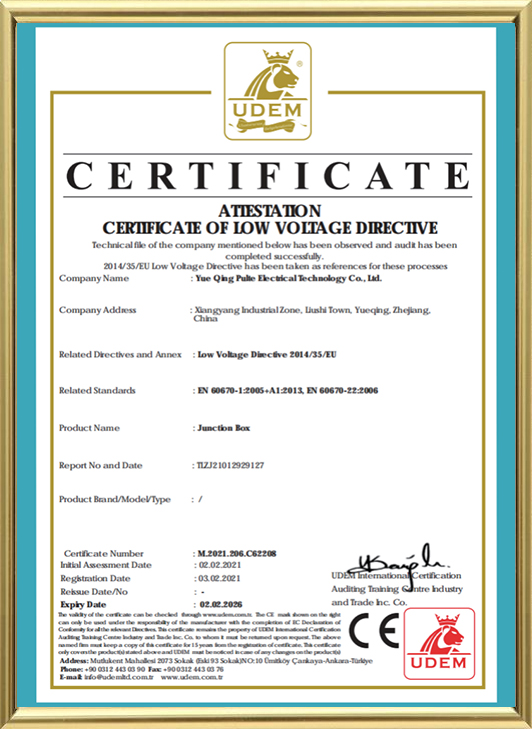
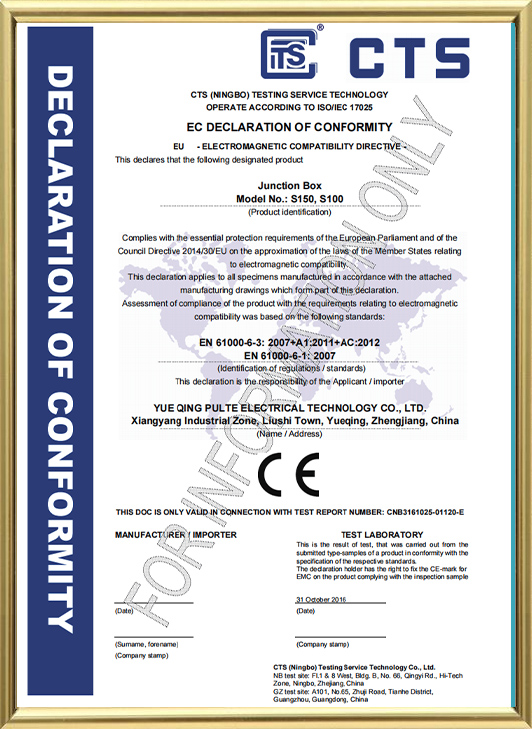
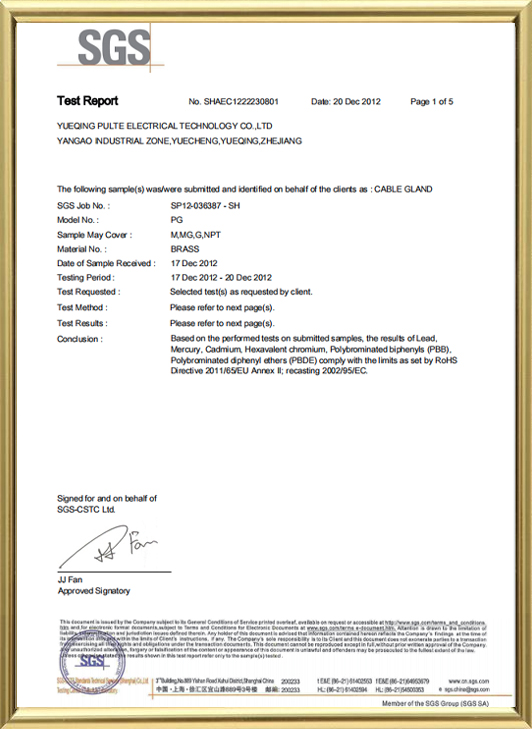
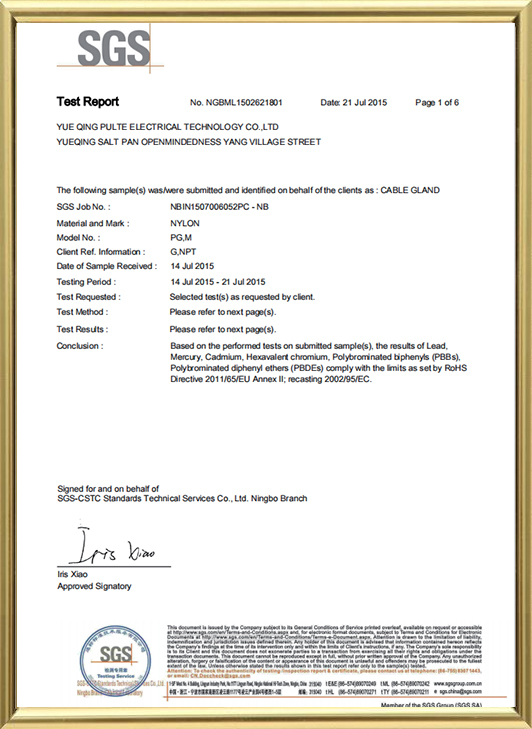
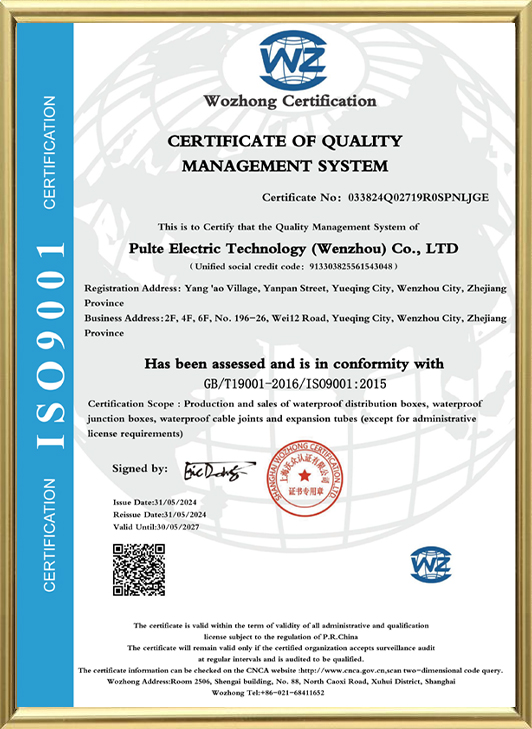
Certificate Of Honor
News
-
-
A Brass Cable Connector plays an important role in maintaining secure cable entry, protecting wiring, and supporting reliable electrical installations. When connections become loos...
READ MORE -
A Brass Cable Connector plays a practical role in keeping electrical cables securely terminated in control cabinets, machinery, power equipment, and industrial wiring systems. As a...
READ MORE -
A Brass Cable Connector can provide a secure cable entry for industrial equipment, but its performance also depends on how the connector is installed. For control cabinets, junctio...
READ MORE
Industry Knowledge Extension
What are the Characteristics and Advantages of JS Galvanized Flexible Metal Conduit?
JS Galvanized Flexible Metal Conduit is a widely used solution for protecting electrical wires and cables in demanding environments. Its design offers a unique blend of durability and flexibility, making it a preferred choice for many industrial and commercial applications.
The primary characteristic of this conduit is its construction from a galvanized steel strip, which is formed into a continuous helical corrugation. This design grants it exceptional flexibility, allowing it to be bent and routed easily around obstacles without the need for additional elbows or fittings. The hot-dip galvanization process provides a thick, robust zinc coating that offers corrosion resistance, protecting the underlying steel from rust and degradation caused by moisture, humidity, and exposure to certain chemicals.
The advantages stemming from these characteristics are substantial. The combination of steel strength and zinc coating results in outstanding mechanical protection. It shields enclosed cables from impact, crushing, abrasion, and even rodent damage. Secondly, its flexibility significantly reduces installation time and labor costs, as it can be snaked through tight spaces with ease. Furthermore, the galvanized finish makes it suitable for use in both indoor and outdoor settings, as well as in corrosive environments where a standard non-galvanized conduit would fail. Finally, the continuous metal construction provides a inherent grounding path, enhancing electrical safety, though a separate grounding wire is often still required by electrical codes.
What are the Common Materials Used for Flexible Metal Conduit?
Flexible Metal Conduit (FMC) is manufactured from various materials, each selected to provide specific properties suited to different environmental challenges and application requirements. The choice of material directly impacts the conduit's corrosion resistance, strength, flexibility, and overall cost.
- 1. Galvanized Steel: This is the common and versatile material. A carbon steel strip is coated with a layer of zinc through a hot-dip process. This zinc layer sacrificially protects the steel from rust, making it suitable for indoor and dry outdoor applications. It offers an balance of strength, flexibility, and cost-effectiveness, though it is not recommended for highly corrosive atmospheres.
- 2. Stainless Steel: For environments where corrosion resistance is paramount, stainless steel is the preferred choice. Grades like 304 and 316L stainless steel offer exceptional resistance to moisture, chemicals, and temperatures. Type 316L, in particular, is ideal for harsh settings such as chemical processing plants, food and beverage facilities, and marine applications. While significantly more expensive than galvanized steel, its longevity in aggressive environments justifies the cost.
- 3. Aluminum: Aluminum conduit is valued for its natural resistance to corrosion and its very light weight. It is easier to handle and install than steel conduits, reducing worker fatigue. Aluminum does not require a galvanized coating as it forms its own protective oxide layer. However, it is softer and provides less mechanical protection against crushing or impact compared to steel. It is also not compatible with direct contact with masonry or earth, as the alkaline environment can cause corrosion.
What are the Main Applications of Flexible Metal Tubing?
Flexible Metal Tubing (FMT) and conduit are indispensable components across numerous industries due to their protective and flexible nature. Their primary role is to safeguard electrical wiring while allowing for movement and easy installation in complex spaces.
1. Industrial Machinery and Control Systems: This is one of the critical applications. FMT is used to connect wiring on machine tools, robots, and assembly line equipment. Its flexibility is essential here, as it can withstand the constant vibration, flexing, and movement of automated machinery without failing, preventing wire fatigue and breakdown.
2. Commercial Building Wiring: Within commercial structures, FMT is extensively used in walls, ceilings, and under floors. It provides a protected pathway for wiring to connect lighting fixtures, HVAC systems, and power outlets. Its ability to bend around structural beams, ductwork, and other obstacles makes it invaluable for electricians during construction and renovation, simplifying the installation process considerably.
3. Outdoor and Hazardous Location Installations: When wiring must be run outdoors or in damp locations, FMT with appropriate corrosion-resistant coatings (like galvanized or stainless steel) is used to protect against moisture and physical damage. Furthermore, specific types, when paired with sealed fittings, are approved for use in hazardous locations where preventing the ingress of flammable gases or dusts is critical for safety.

- Add: No. 196, Wei Twelve Road, Economic Development Zone, Yueqing City, Zhejiang Province, China
- Phone: +-86-18967761082
- Fax: +86-577-62056352
- Email: z1721242465@163.com
Contact us now
Copyright © 2024 Pulte Electric Technology (Wenzhou) Co., Ltd. All Rights Reserved

JS Galvanized Flexible Metal Conduit Factory